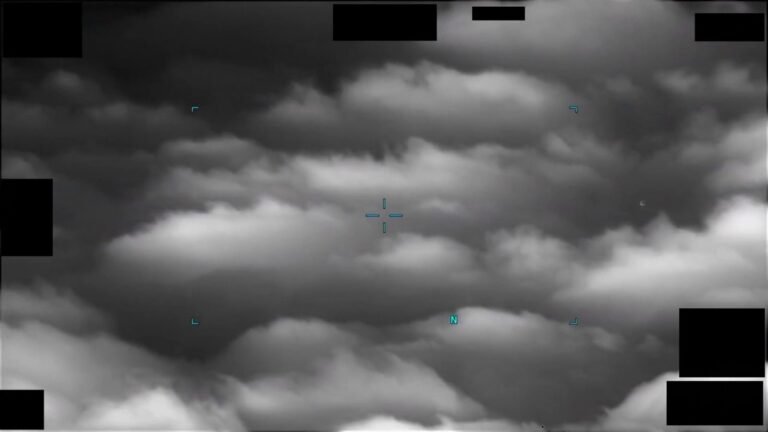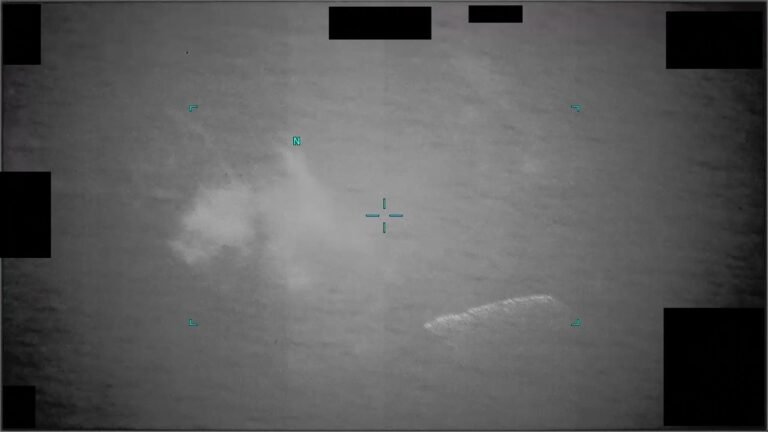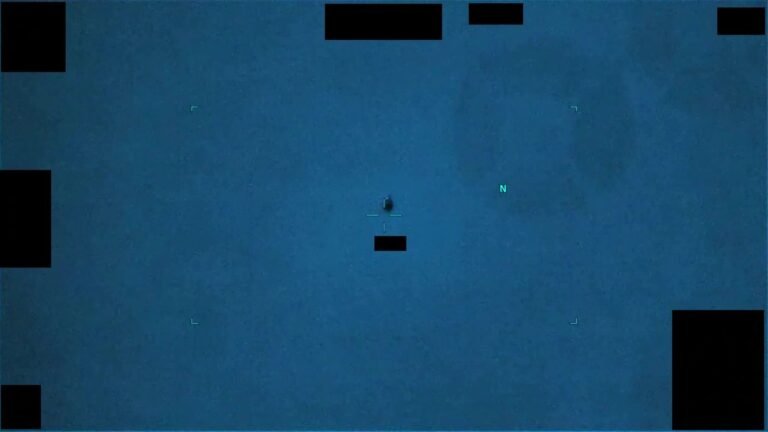


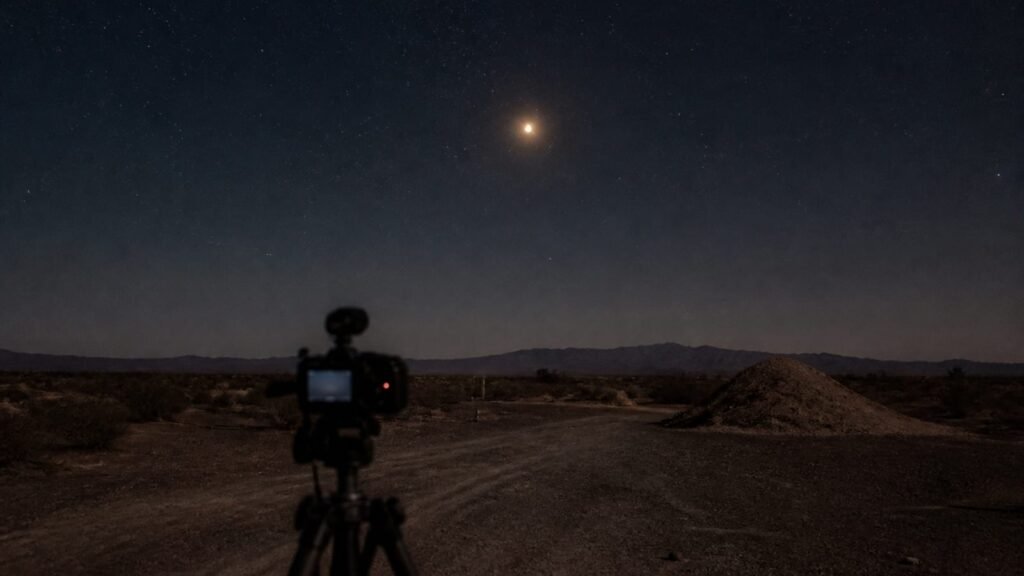
The internet sees a blob scream across infrared and types “impossible.” Physics asks for a ruler.
A preprint by Jacob Haqq-Misra and Ravi Kopparapu went through all 112 sensor videos released under the Pentagon’s PURSUE program. Their finding: not one public clip includes the full set of numbers you need to turn screen motion into a real-world speed.
The four missing ingredients
You can always count pixels per frame. To get miles per hour you also need:
- Range (how far is it?)
- Observer speed (how fast is the jet?)
- Aspect angle (across, at you, or away?)
- Field of view (how wide is the camera’s eye?)
Miss one, and the GIF lies.
Remember GOFAST
The Navy’s GOFAST clip looked like something skimming the ocean at cartoon speed. Once analysts used the on-screen telemetry, a lot of that motion was parallax — the camera platform moving — and the object was consistent with something much slower.
PURSUE often does not even give you that telemetry. Displays are redacted. Two clips come closer (PR113, PR149) and still cannot separate bird-from-spaceship. PR149’s upper bound was around Mach 0.4. Fast for a seagull. Not “physics is broken.”
What this does not prove
It does not prove every object is mundane. It does not prove aliens. It proves the public file dump is not a physics dump. If the government wants independent scientists to finish the sentence, it has to release range and unredacted sensor data — not just the highlight reel.
What this means for you
Stay curious. Stay cheap with certainty. “It looks fast” is a feeling. Speed has units.
Bottom line: 112 videos, zero recoverable velocities. Transparency without telemetry is a flashlight with no batteries.
GLHR NEWS explains the news. Not investment, tax, or trading advice. Do your own work before you act.