

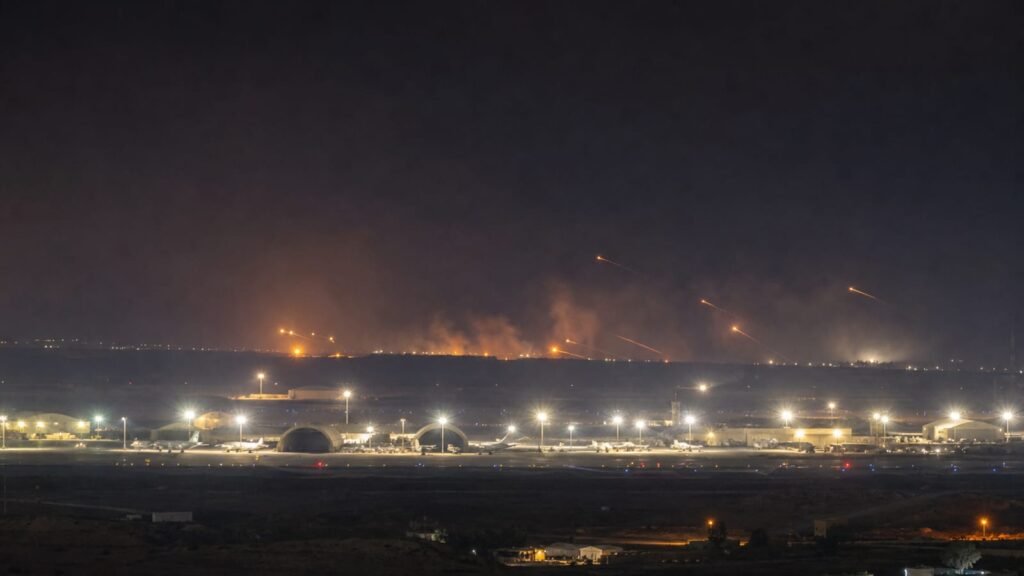
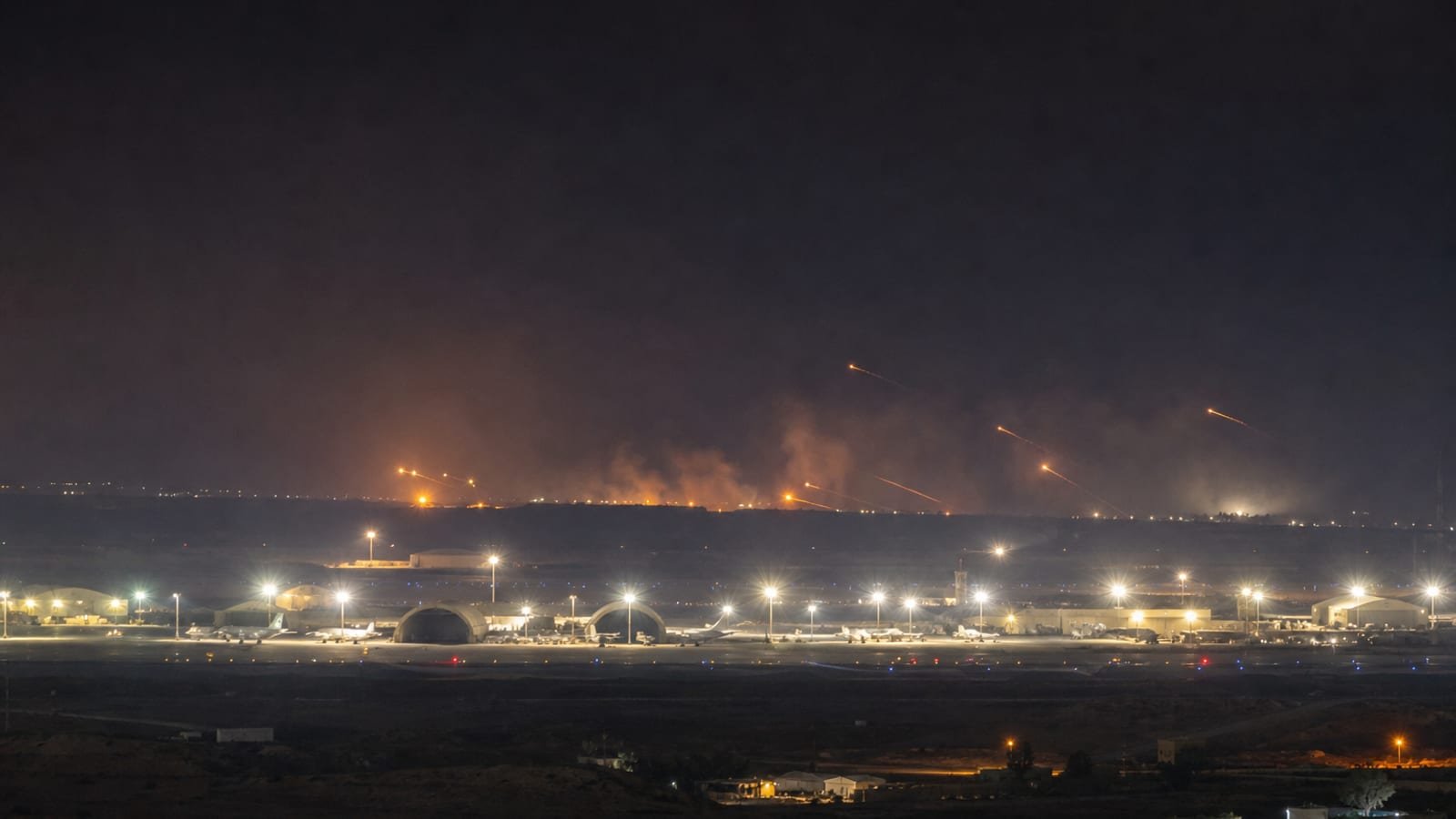
Thursday’s U.S. news is not a jobs print yet. It is air-defense sirens in a country that is supposed to be the quiet neighbor.
Kuwait’s army said it was confronting hostile missile and drone attacks from Iran, and that bangs residents heard were intercepts, not hits on neighborhoods. Iranian state media said the targets were U.S. bases in Kuwait.
That is an American story even if the map is someone else’s.
What Washington is saying
A day earlier, President Trump told reporters the renewed hostilities would not continue for “too long.” He called Tuesday’s U.S. strikes a “very heavy attack” and said he did not know “how much more they can take.”
He also said U.S. forces were ready to go again whenever he wants.
Reuters reported that top aides — including Vice President JD Vance and Secretary of State Marco Rubio — have been trying to keep the Iran file from turning into a pre-November midterm inferno. Trump is not on the ballot. He said he still intends to help Republicans, and he framed the war as blocking an Iranian nuclear weapon.
Why this sits in your week
This is the same week as:
- Friday’s jobs report
- Oil around $90–$96
- A Fed meeting on September 15–16 with hike odds near two-thirds
War headlines and payrolls headlines will trade in the same window. That is how a missile intercept in Kuwait shows up in a mortgage-rate conversation on Friday afternoon.
What this means for you
If you have family in uniform: deployments are getting longer, not shorter, even while the president talks endgames.
If you vote with your gas tank: a “short” round that keeps Hormuz scary is still an expensive round.
Bottom line: America is trying to fight a limited war, talk about ending it, and win an election. Kuwait’s intercepts are the part that is not theoretical.
GLHR NEWS explains the news. Not investment, tax, or trading advice. Do your own work before you act.