


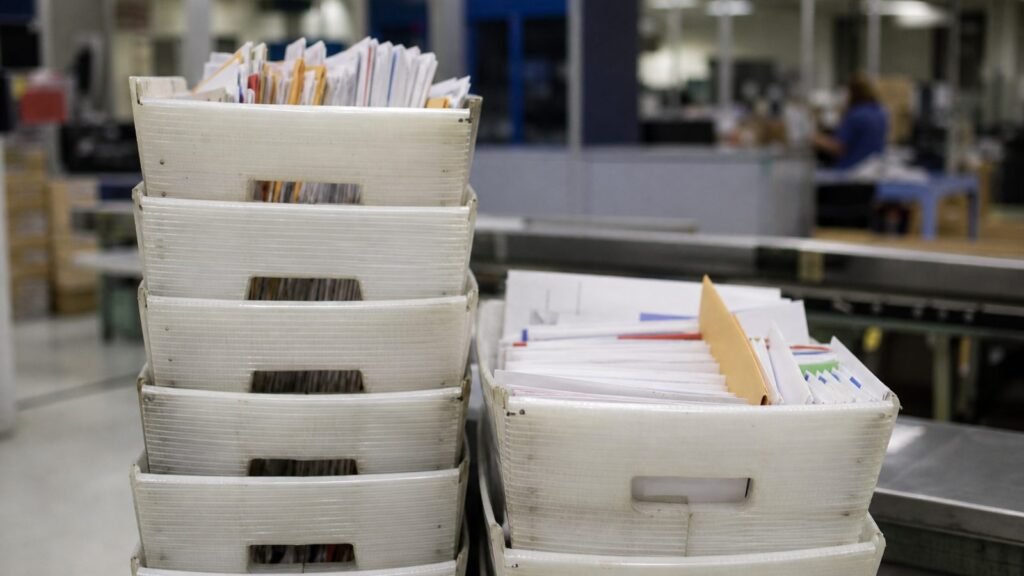
We told you North Carolina started mailing. Then the judge in Boston did the bigger thing.
U.S. District Judge Indira Talwani issued a preliminary injunction Friday blocking the Postal Service from enforcing its final mail-ballot rule for the November 3 midterms. That is sturdier than last week’s 14-day restraining order. The TRO is lifted. The appeals that rode on it are, for now, moot.
Her sentence: immediate implementation “threatens disenfranchisement of millions.” On the other side, “the record includes no evidence relating to fraudulent mail voting to support the rushed implementation.” Less than 70 days to the election. She called disenfranchisement “practically inevitable” if the rule stood.
What she did and did not do
She refused the Justice Department’s request to pause the order while they appeal. She said states that want to follow the new envelope rules still may. She told government lawyers to give written notice to USPS officials and warn them of contempt if they break it.
She found USPS defied an earlier injunction by finalizing the rule after the Supreme Court said her first block was premature. She did not hold anyone in contempt for that, given the justices’ procedural holding.
California led a pack of states. The League of Women Voters and others sued. A whistleblower said the portal was an untested rush. We already told you the portal was not live when Carolina’s first wave moved.
What this means for you
If you requested a mail ballot, Friday’s order is why the mail is still supposed to move under the old rules. If you live in a state that wants the new envelopes, the judge left that door open.
Bottom line: the pause became a lock. No fraud record. Millions of ballots in the air. November 3 is the date, not a software experiment.
GLHR NEWS explains the news. Not investment, tax, or trading advice. Do your own work before you act.